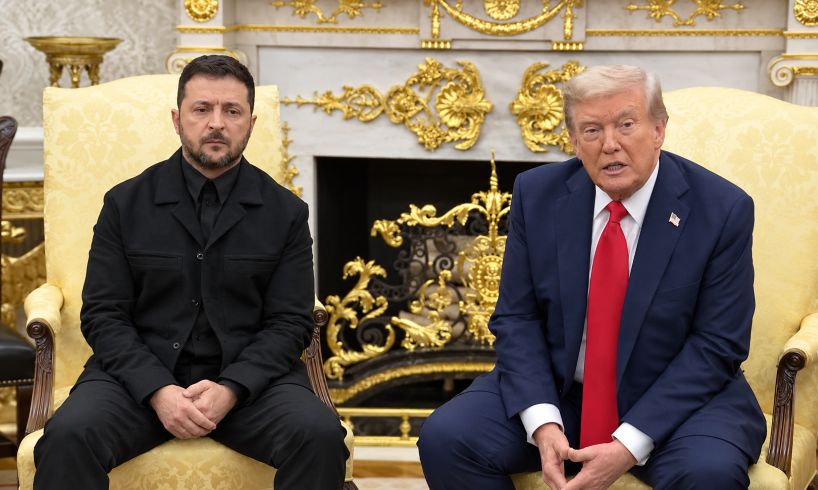
President Donald Trump wanted Volodymyr Zelenskyy to stop hitting Russian oil refineries. The reason was not difficult to understand: as Ukraine intensified its long-range attacks on Russia’s energy infrastructure, damage to refineries was contributing to pressure on already troubled fuel markets, with Trump openly warning about the effect on diesel prices, but instead of simply agreeing to back away from the attacks, Zelenskyy came out of his meeting with the president offering something very different — a reciprocal energy ceasefire in which Ukraine would stop hitting Russian energy facilities if Russia stopped hitting Ukraine’s.
That distinction matters because the picture that emerged after the Trump-Zelenskyy meeting was not one of Kyiv simply accepting a demand from Washington, but of Zelenskyy trying to turn the issue into a two-sided agreement that would apply equally to Moscow.
Trump had already made clear that Ukrainian attacks on Russian refineries were becoming a concern for him, particularly because of their impact on fuel markets. Before meeting Zelenskyy at the United Nations in New York, Trump said the Ukrainian strikes represented “a serious hit on the Russians” but added that they were also “a serious hit on the price of diesel.”
According to reporting from the Financial Times, Trump had repeatedly urged Zelenskyy during a September 20 phone call to stop attacks on Russian oil refineries, with officials describing the president as emphasizing the issue of diesel and its growing importance to the American economy.
But Zelenskyy did not emerge from the September 22 meeting announcing that Ukraine would simply stop its campaign.
Instead, he offered Trump a proposal that effectively put the same question back in Russia’s court.
“We are ready for energy ceasefire,” Zelenskyy told reporters, explaining that Ukraine would be prepared to stop attacking Russian diesel facilities and refineries “if they will not attack our energy system, our electricity, heating system, water supplies.”
That was a significant qualification, because Ukraine has repeatedly accused Russia of deliberately targeting the infrastructure that keeps Ukrainian cities functioning, particularly as winter approaches and concerns grow about attacks on electricity, heating and other essential services.
Zelenskyy also made clear that Trump had not obtained an agreement from Kyiv to halt the strikes unilaterally, saying the discussion was about an “energy ceasefire” rather than Ukraine simply giving up attacks on Russia’s oil industry.
The timing could hardly be more dramatic.
For weeks, Russia and Ukraine have been trading increasingly intense long-range attacks, with Russia striking Ukrainian power, fuel and port infrastructure while Ukraine has expanded its drone campaign against Russian refineries and other energy facilities. Reuters reported that a September 20 Ukrainian strike forced Moscow’s oil refinery to halt crude processing, while other Ukrainian attacks have reached targets thousands of kilometers from Ukraine.
Now Trump is trying to push the two sides toward an arrangement that could protect energy infrastructure, while Zelenskyy is saying that such an agreement has to apply to both countries.
And that is where Vladimir Putin enters the equation.
If Moscow accepts the proposal, it could create a limited area of de-escalation focused specifically on energy infrastructure, potentially reducing some of the pressure on both sides as winter approaches. If Russia rejects it or attacks continue, however, the proposal gives Kyiv an argument that it was prepared to stop its own strikes provided Moscow did the same.
Zelenskyy described his meeting with Trump as “positive and productive” and said the two sides discussed “potential de-escalatory steps that can open up the way to diplomacy.”
But there is still a huge gap between discussing an energy ceasefire and actually making one work.
Trump has said he believes the broader war can eventually be brought to an end, while Zelenskyy has warned that Russia may be preparing another major attack and has continued pressing Washington for additional air defenses, including Patriot missiles, as Ukraine prepares for another difficult winter.
So the latest Trump-Zelenskyy confrontation is not simply about oil refineries.
It is about whether Washington can persuade Kyiv and Moscow to stop targeting the infrastructure that keeps their economies and populations running, whether Russia is willing to accept the same restrictions being asked of Ukraine, and whether a narrow energy truce can become the first step toward the larger diplomatic settlement Trump says he wants.
For now, Zelenskyy has delivered his answer: Ukraine is willing to stop — but it expects Russia to stop too.
Comments (0)